
Would You Rather?
TITANWARE APPSTrivia
3.9348.00 Reviews
- Version
- 16.0.7
- Installs
- 100.00K
- Age Rating
- Mature 17+
Screenshots
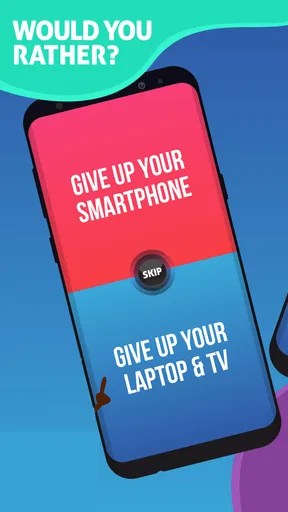
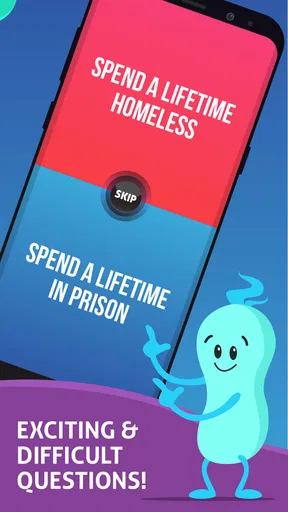
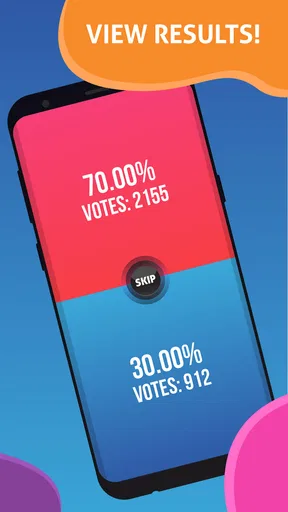
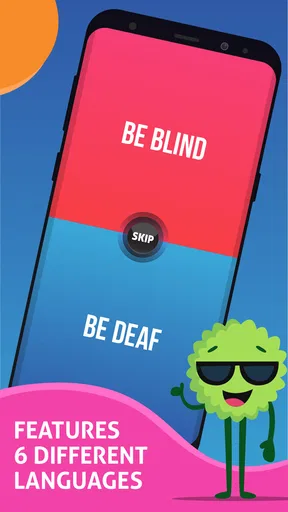
Our Review of Would You Rather?
 Analysis by Appyee
Some trivia games test what you know, while Would You Rather? tests how quickly you can choose between two awkward, funny, or difficult possibilities. I found that difference important from the first few rounds. This is not a traditional quiz where a correct answer earns the spotlight. It is a social decision game built around questions that can expose your sense of humor, your priorities, and occasionally your ability to defend an unpopular opinion.
Developed by TITANWARE APPS, the game sits in the trivia category but plays more like a conversation starter. It is free to install, carries a Mature 17+ content rating, and has reached over 100 thousand installs. Its average rating is 3.9 from around 4.8 thousand ratings, which feels consistent with my experience: the core idea is immediately accessible, but whether you enjoy it depends heavily on the people playing and on your tolerance for mature or uncomfortable scenarios.
How the current version feels to play
The basic loop is wonderfully simple. A question presents two choices, and you select the option you would rather live with. There is no long tutorial to study and no complicated control scheme to learn. That makes it easy to pass around during a casual gathering, use as an icebreaker, or open when you want a quick distraction rather than a long gaming session.
What makes the game work is the pressure behind a supposedly harmless choice. Picking between two unpleasant outcomes can reveal more than a factual question would. Even a silly prompt can lead to a debate about money, relationships, embarrassment, personal habits, or impossible hypothetical situations. I often found the discussion after the answer more entertaining than the tap itself.
The experience is strongest with people who are comfortable explaining themselves. If everyone selects an answer silently, the game can feel shallow. If players say why they chose it, the same prompt becomes a small group conversation. My practical advice is to treat each question as a starting point rather than rushing through a large number of them.
The Mature 17+ rating matters here. Adults should still expect questions that may be provocative, embarrassing, or unsuitable for children. I would not hand the phone to a mixed-age family group without first considering the audience. For an adult friend group, that edge can be part of the appeal; for a school, workplace, or family setting, it can create unnecessary discomfort.
Why the simple format remains effective
Many trivia games reward memory, speed, or specialist knowledge. This one removes those barriers. You do not need to know sports history, geography, entertainment facts, or science to participate. Someone who usually avoids quiz games can still join immediately, because the challenge is personal judgment rather than recall.
That also makes the game useful when the group has very different interests. A knowledgeable player does not automatically dominate, and a newcomer is not punished for missing an answer. The trade-off is that there is less of a measurable sense of progress than in a conventional quiz. You are not building a knowledge score; you are building reactions and conversations.
I also noticed that the game works differently depending on the size of the group. With two people, it becomes a direct comparison of opinions and can be surprisingly revealing. With several friends, the fun comes from seeing where the majority lands and which answer seems unexpected. In a very large group, though, individual explanations can get lost, so it helps to choose a few memorable prompts instead of trying to discuss every one.
Using it in an ordinary day
A realistic use case is a quiet evening when friends are waiting for food or deciding what to watch. Rather than opening a complicated multiplayer title, one person starts a round and reads the choices aloud. Everyone answers, then the group asks the person with the most unusual response to explain it. The game fills an awkward pause without demanding a full evening of attention.
It can also work during a long journey or a relaxed video call, provided the players agree on the tone first. I would set a simple rule: anyone can skip a question without having to justify the decision. That keeps the game playful when a prompt touches on a personal subject. The ability to protect the mood is more valuable than forcing every player to answer everything.
For solo use, the value is more limited. You can still consider the choices and compare your instincts with what friends might choose, but the social reaction is where the format has its greatest strength. If you are looking for a deep single-player trivia challenge, this is probably not the best match.
Where it differs from ordinary trivia alternatives
Compared with a standard multiple-choice quiz, this game has no objective answer to chase. That makes it less educational but more inclusive. A conventional trivia app is better when you want to learn facts, track improvement, or compete on knowledge. This title is better when the goal is to make people talk, laugh, disagree, or discover an unexpected side of one another.
It also differs from party games that depend on drawing, acting, or timed physical challenges. The activity is quieter and easier to start. You do not need a table full of materials or a player who understands complicated rules. On the other hand, it relies more on conversation, so a group that prefers fast action may find the pace too passive.
Against a random conversation-starter app, the two-choice structure gives the discussion more direction. You are not faced with a blank prompt. The tension between the alternatives creates an immediate opinion, even when neither option is attractive. That is a real strength, although repeated sessions can feel less fresh if the same style of dilemma no longer surprises your group.
What the update history means for players
The current version is 16.0.7, while the game first appeared on May 23, 2019. That combination suggests a product that has continued through multiple revisions rather than remaining a one-off release. I would view the version number as evidence of ongoing maintenance, not as a promise that every part of the experience has been redesigned. The important question for a player is whether the present version remains comfortable and enjoyable to use, and the answer depends more on the quality of the prompts and your group than on a long feature list.
For someone who has played an earlier release, a later version can be reassuring because it indicates that the developer, TITANWARE APPS, has kept the title active over time. Still, I would not assume that an updated version automatically changes the fundamental experience. The central appeal remains the same: read a dilemma, choose a side, and discuss the result.
That continuity is helpful for returning users. If you enjoyed the game because it was quick to understand, a familiar structure means you can come back without relearning a complicated system. It is also useful when introducing the game to friends, because experienced players can explain the concept in seconds. The downside is that players hoping for a completely different mode may find the evolution more incremental than transformative.
One practical point is the minimum operating-system requirement. The game supports Android 7.0 and later, so people using older devices should check compatibility before planning to rely on it for a gathering. On a supported phone, the modest premise should make it easy to approach, but compatibility still matters when the device is old or shared among several family members.
The cost of trying it
The initial price is free, which lowers the risk of testing it with a group. You can install it, try a few rounds, and decide whether the tone suits your friends without paying upfront. That is especially useful for a social game, because its value cannot be judged entirely alone.
There are in-app purchases ranging from $0.99 to $40.99 per item. I would keep that in mind before treating the game as completely cost-free. The free entry point is convenient, but anyone considering purchases should first decide whether additional content genuinely improves their particular use. For occasional play, I would be cautious about spending simply because a group has enjoyed one session.
My preferred approach is to use the free experience as a trial of the game’s personality. Ask yourself whether the prompts create real conversation, whether the Mature 17+ tone fits your group, and whether people want to play again. Those answers tell you more than the download count or rating. A purchase makes more sense when the game has become a regular part of your gatherings rather than a one-time novelty.
Small habits that improve the experience
First, do not let the fastest player control the entire session. Take turns choosing the question or reading it aloud, then give everyone a moment to decide. This prevents the game from becoming a performance by one outspoken person and gives quieter players room to participate.
Second, separate funny dilemmas from genuinely sensitive ones. If a question changes the mood, move on rather than turning the choice into a test of honesty. The game is more enjoyable when players feel they are choosing how much to share, not being pushed into a confession.
Third, use explanations strategically. Asking every player to justify every answer can make a short session drag. Instead, invite the minority opinion or the answer that surprised the group. This keeps the discussion focused and gives the most interesting choices room to breathe.
Fourth, do not judge the game by a solo test alone. Its strongest feature is the way a question changes when several people answer differently. If you only tap through prompts by yourself, you are evaluating the least distinctive part of the experience.
Finally, agree on boundaries before starting with people you do not know well. The age rating is a useful warning that the content may not fit every social setting. A quick agreement about skipping questions can preserve the fun and avoid making the app responsible for a conversation the group was not ready to have.
Who should choose it, and who should skip it
I recommend it to adults who want a low-effort party game that can begin immediately. It is a particularly good fit for friends who enjoy debating hypothetical situations and do not need a winner to stay engaged. It also suits people who normally feel excluded by knowledge-based trivia, because there is no requirement to memorize facts or prepare beforehand.
I would be more hesitant to recommend it to someone seeking a structured competitive experience. If your ideal game includes detailed scoring, a clear progression system, or factual explanations after each answer, a conventional quiz app will serve you better. The same is true for players who prefer private, solo challenges and do not enjoy discussing personal choices.
It is also not my first choice for children, formal team-building events, or mixed groups where the age rating and mature tone may cause problems. A safer, more neutral conversation game would be a better option in those situations. The title’s directness is an advantage only when the audience is comfortable with it.
My view after spending time with it
The best reason to install this game is not the number of questions; it is the conversation that follows a difficult choice. That is why I see it as a social tool first and a trivia game second. It is quick to understand, easy to bring into an ordinary evening, and flexible enough for two friends or a small group. The lack of factual answers removes pressure and lets people participate on equal terms.
Its limitations are just as clear. The experience can become repetitive if the group only taps through prompts without talking. Solo play is less compelling, and the Mature 17+ rating narrows the situations where it is appropriate. The presence of paid items also means that free installation should not be confused with an entirely purchase-free experience.
After several rounds, my recommendation is straightforward: try it when you want an adult-friendly conversation starter, not when you want to sharpen your general knowledge. Let players skip uncomfortable choices, slow down for the interesting disagreements, and judge the game by how naturally your group keeps talking. If that social rhythm suits you, Would You Rather? can earn a place among your casual party games. If you need firm answers, deep progression, or a serious solo challenge, choose a traditional trivia alternative instead.
Looking ahead, I would pay attention to how future versions preserve that balance between quick access and fresh discussion. The game has remained active since its 2019 release and is currently at version 16.0.7, so returning players have reason to expect continued attention. What matters most, though, is whether new or refreshed material keeps the dilemmas interesting without losing the simple format that makes the game so easy to share.
Verdict
Strengths of Would You Rather?
- Simple questions make it easy to start playing with friends.
- Works well for parties, road trips, and casual group gatherings.
- Wide range of topics keeps rounds varied and entertaining.
- Quick voting creates funny debates and reveals personal preferences.
- Easy rules make the game accessible to players of different ages.
Limitations of Would You Rather?
- Some questions may feel repetitive after extended play sessions.
- A few choices can be awkward or uncomfortable for younger players.
- The game is less enjoyable when played alone.
- Question quality may vary depending on the selected category.
- Some features or content may require ads, purchases, or an internet connection.
Similar Picks in This Category
View All
Millionaire 2026 Quiz & Trivia
Quiz & Trivia Games by Submarine Apps4.5

Brain Test 2: Tricky Stories
Unico Studio4.7

Trivia Crack: Brain Quiz Games
etermax4.4

QuizzLand. Quiz & Trivia game
Quiz & Trivia Games by Mno Go Apps4.8

Brain Test: Tricky Puzzles
Unico Studio4.7

Logo Quiz
bubble quiz games4.5
Frequently Asked Questions
What is Would You Rather?
Would You Rather? is a conversation and party game built around choosing between two hypothetical options. The questions can be funny, challenging, awkward, or thought-provoking, making the app suitable for playing with friends, family, couples, or other groups. It is designed to keep conversations moving and can be enjoyed casually without requiring complicated rules or prior experience.
How do you play Would You Rather?
The basic gameplay is simple: the app presents a question with two choices, and each player selects the option they prefer. Players can then explain their decision, compare answers, and discuss the reasoning behind them. Depending on the available mode, you may be able to play alone, take turns with people nearby, or use the questions as an icebreaker during a social gathering.
Is Would You Rather? suitable for children and families?
Suitability depends on the question categories and content included in the version you download. Many questions are family-friendly, but some packs may contain mature, embarrassing, or suggestive topics intended for older players. Before handing the device to children or using the app in a family setting, review the available categories, age rating, and content warnings to make sure they match your group.
Can I play Would You Rather? without an internet connection?
Offline availability depends on the specific app version and which question packs or features it offers. Basic questions may remain accessible after installation, while online multiplayer, advertisements, updates, or additional content can require an internet connection. If offline play is important to you, check the store description and test the app after temporarily disabling mobile data or Wi-Fi.
Does Would You Rather? include ads or in-app purchases?
Many free Would You Rather? apps are supported by advertising and may offer optional purchases for removing ads, unlocking question categories, or accessing extra features. The exact pricing and restrictions vary between Android and iOS versions. Check the app’s store listing before downloading, especially if you want an uninterrupted experience or plan to let younger users play on your device.
Play our best games!


